
What Is Light Demolition — And Do You Need a Permit in Texas?
If you’re planning a remodel, starting a new build, or clearing space on your property, you may have come across the term “light demolition” and wondered exactly what it means — and whether it requires a permit in Texas. Both are good questions, and the answers matter before you pick up a sledgehammer or hire a crew.
This guide explains what light demolition actually includes, how it’s different from structural or full-building demolition, and what the permitting rules look like for demolition projects in San Antonio and the surrounding area.
What Is Light Demolition?
Light demolition refers to the removal of smaller structures, specific building components, or interior finishes — as opposed to the full teardown of a complete building or structure. It’s the kind of demolition that happens at the beginning of most remodels and site prep projects, and it covers a wide range of common scopes.
Light demolition typically includes:
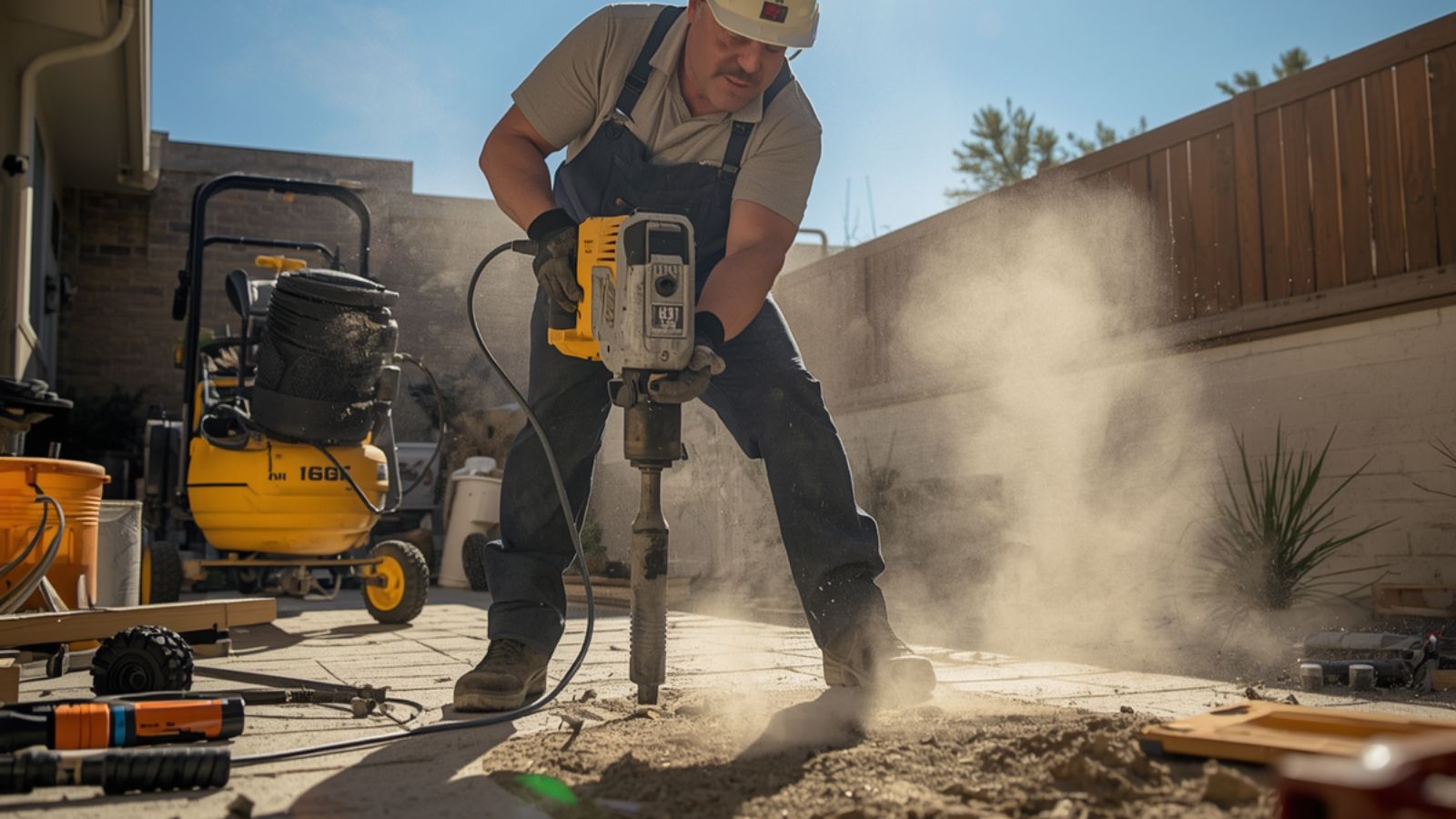
- Concrete breaking and removal — breaking up and hauling off existing driveways, sidewalks, patios, and slabs
- Interior finish demolition — removing flooring, drywall, cabinetry, fixtures, and ceiling material inside an existing structure
- Small structure teardowns — taking down sheds, covered patios, pergolas, fences, detached garages, and outbuildings
- Retaining wall and masonry removal — breaking out existing block walls, retaining walls, and masonry elements
- Selective demolition — carefully removing specific components while leaving the surrounding structure intact
What light demolition does not include: the structural demolition of load-bearing walls, full building teardowns, or any scope involving hazardous materials like asbestos or lead paint. Those require specialized contractors and a different set of permits and procedures entirely.
Common Reasons Homeowners Need Light Demolition
Most residential light demolition projects fall into one of a few categories. You might need demo work if you’re:
- Replacing an old driveway or patio slab before new concrete is poured
- Preparing for a kitchen or bathroom remodel that requires removing existing finishes
- Tearing down a shed, old fence, or covered patio before new construction begins
- Removing a retaining wall that has failed or needs to be rebuilt
- Clearing a section of the property as part of a larger build or addition
In most of these cases, the demolition scope is straightforward, but it’s still work that benefits from a professional crew — especially when debris removal, concrete breaking, or working around existing structures is involved.
Do You Need a Permit for Demolition in Texas?
The short answer: it depends on the scope and location of the work.
In Texas, permit requirements for demolition are determined at the local level — by the city, county, or municipality where the project is located. There’s no single statewide rule that covers all demolition work. Here’s a general framework for how it works in the San Antonio area:
When a Permit Is Usually Required
- Demolition of a complete structure or building, even a small one
- Removing a load-bearing wall or any structural element of an existing building
- Demolition connected to a larger permitted project (renovation, addition, new construction)
- Any work within a public right-of-way, including concrete adjacent to a street or sidewalk easement
When a Permit Is Often Not Required
- Breaking out and replacing a private residential driveway or patio slab
- Interior finish demolition as part of a home remodel (though the remodel itself may require permits)
- Removing a non-structural outbuilding, shed, or fence on private property
These are general guidelines — not a legal guarantee. Rules vary by municipality, and what applies in the City of San Antonio may differ from what applies in Boerne, Helotes, or an unincorporated Bexar County address. If you’re in a neighborhood with an HOA, you may also need approval from the association before any demolition or construction work begins.
When in doubt, check with your local building department before starting work. A permit pulled correctly costs far less than a stop-work order or a fine after the fact.
Does Forge Pull Permits for Demolition Projects?
Yes — when permits are required, we work within the permitting process. For most residential light demolition scopes, permits either aren’t required or are pulled as part of a larger permitted project we’re supporting. For general contractors and builders, we coordinate around the permit and inspection schedule already in place for your build.
If you’re unsure whether your project requires a permit, we’re happy to help you think through it when we discuss scope.
Light Demolition vs. Full Structural Demolition: What’s the Difference?
This is a question we get often, especially from homeowners who aren’t sure what kind of contractor they need.
Light demolition is non-structural, selective work — removing specific elements without compromising the integrity of the surrounding structure. A professional light demo crew uses hand tools, jackhammers, and small equipment to break and remove materials cleanly.
Full structural demolition — tearing down an entire building, removing load-bearing walls, or using heavy equipment like excavators to bring down a large structure — is a different scope that typically requires engineering review, specialized equipment, and a different permitting process.
Forge specializes in light demolition. If your project requires full structural demo or hazardous material abatement, we’ll tell you that upfront and point you toward the right kind of contractor rather than take on work that’s outside our scope.
What Happens to the Debris After Demolition?
Debris removal is part of how Forge operates on every demo job. We don’t leave a pile of broken concrete or construction waste for you to deal with. When we finish a demolition scope, the site is cleared and ready for the next phase of work — whether that’s a new concrete pour, a framing crew, or whatever comes next on your project.
If you need debris removal separately from demolition work — for instance, after another crew has already done the teardown — that’s something we can discuss as a standalone scope as well.
Frequently Asked Questions
What is considered light demolition in Texas?
Light demolition generally refers to the removal of non-structural elements — including concrete slabs, interior finishes, small outbuildings, fences, and masonry — without touching the load-bearing structure of a building. It’s the type of demolition that typically precedes a remodel, renovation, or new concrete pour. Heavy or structural demolition involves load-bearing elements, complete building teardowns, or the use of heavy equipment and requires a different scope and permitting process.
Do you need a permit to tear down a shed in San Antonio?
In most cases, tearing down a small non-structural outbuilding or shed on private residential property in San Antonio does not require a standalone demolition permit. However, rules vary by municipality, and if the shed is attached to the home or involves utilities (electrical, plumbing), additional requirements may apply. Check with the City of San Antonio Development Services Department or the applicable local authority before starting work.
Do you need a permit to break up and replace a concrete driveway in San Antonio?
For most private residential driveways, breaking out and replacing concrete does not require a demolition permit in San Antonio. However, if the work extends into a public right-of-way or involves curb cuts, a right-of-way permit may be required. HOA communities may also have their own approval process. Confirm with your local authority if you’re unsure.
How much does light demolition cost in San Antonio?
Light demolition costs in San Antonio depend on the type and scope of work. Concrete demolition is often priced by the square foot; interior finish demo may be priced by the room or by the hour depending on complexity. Small structure teardowns vary by the size and type of structure. The best way to get accurate pricing is to describe your project to a local contractor and request a quote based on the actual scope.
Can you do interior demolition without a permit?
Interior finish demolition — removing flooring, drywall, fixtures, and cabinetry — often does not require a standalone permit. However, if the demolition is part of a larger renovation project that includes structural changes, electrical or plumbing work, or changes to the building envelope, those parts of the project likely require permits. The demolition itself is usually just the first step in a larger permitted scope.
Does light demolition require hazardous material testing?
In older homes, demolition can disturb materials that contain asbestos, lead paint, or other hazardous substances. Homes built before 1980 are more likely to contain these materials. If you’re working on an older structure, it’s worth having an environmental assessment done before demolition begins. Forge does not perform hazardous material abatement — that requires a licensed environmental contractor. We can handle the light demo scope once abatement is complete if applicable.
How long does a light demolition project take?
Most residential light demolition scopes are completed in one to two days. Concrete demolition on a standard driveway or patio can often be completed in a single day. Interior finish demo on a bathroom or kitchen remodel depends on the amount of material being removed. Larger scopes — multiple rooms, full site clearing, or complex structural elements — may take longer. We’ll give you a realistic timeline when we discuss your project.
Will you damage surrounding areas during demolition?
Protecting what stays is part of the job. In interior demolition especially, we work carefully around finishes, walls, and structures that aren’t part of the removal scope. Selective demolition requires precision, and an experienced crew knows how to remove what needs to go without creating collateral damage. On exterior projects, we take care to protect adjacent landscaping, fencing, and structures as well.
Can I do my own light demolition and hire Forge for the concrete pour?
Yes — homeowners do this occasionally, especially with interior demo. If you’re planning to handle the teardown yourself and need a professional crew to handle the concrete work afterward, we’re happy to take it from there. Just be aware that the condition of the site when we arrive can affect scope and pricing, so it’s worth a conversation before you start swinging.
What areas does Forge serve for light demolition?
We provide light demolition services across the greater San Antonio metro and into the Texas Hill Country, including Stone Oak, Boerne, Fair Oaks Ranch, Helotes, and Bulverde. If your project is outside our primary service area, contact us — we may still be able to help depending on scope and location.
Ready to Clear the Site?
Forge Concrete & Demolition handles light demolition for builders, general contractors, and homeowners across San Antonio and the Texas Hill Country. Whether you need a concrete slab broken out, an interior stripped for a remodel, or a structure torn down before construction begins, our crew shows up ready to work and leaves the site clean.
Contact us today to request a quote or learn more about our light demolition services.