

Concrete Patio vs. Pavers: Which Is Better for San Antonio Homeowners?
If you’re planning a new outdoor living space, you’ve probably already started comparing your options — and the concrete patio vs. pavers debate comes up for almost every homeowner at some point. Both are popular choices, both can look great, and both have real tradeoffs when it comes to cost, maintenance, and long-term performance in the San Antonio climate.
This guide breaks down the honest differences between the two so you can make a decision that fits your property, your budget, and the way you actually use your outdoor space.
The Short Answer
For most San Antonio homeowners, a poured concrete patio is the stronger value. It costs less upfront, requires less maintenance, and holds up well in the Texas heat when installed correctly. Pavers have their own advantages — particularly for aesthetics and repair flexibility — but they come at a significantly higher price and require more ongoing attention in this climate.
That said, the right answer depends on your priorities. Here’s how they compare across the factors that matter most.
Cost Comparison
Concrete Patio
In San Antonio, poured concrete patios typically run $6 to $10 per square foot installed for a standard broom finish. Decorative finishes — stamped concrete, exposed aggregate, or a troweled smooth finish — can push costs to $12–$18 per square foot or more depending on the complexity of the pattern and finish. For a 200–400 square foot patio, a standard concrete pour generally runs $1,200 to $4,000, while decorative work can cost significantly more.
Pavers
Paver installation in San Antonio typically runs $15 to $30 per square foot installed, depending on the paver material (concrete, brick, or natural stone), the pattern, and the complexity of the project. The same 200–400 square foot patio could cost $3,000 to $12,000 or more with pavers. Natural stone pavers — travertine, flagstone — push to the high end of that range or beyond.
Bottom line on cost: Concrete wins on upfront price in almost every comparison. For homeowners working with a budget, it’s often the only practical choice for larger patio footprints.
Durability in the Texas Climate
Heat
San Antonio summers are brutal, and surface temperature matters if you’re walking barefoot or have pets and kids using the patio. Concrete heats up in direct sun, but lighter-colored concrete reflects more heat than darker paver options. Light-colored concrete or pavers are the better choice for patios that get full afternoon sun — which in South Texas is something worth planning around.
One advantage pavers have here: individual units can be replaced if heat cycling causes cracking or surface damage over time. With a poured concrete slab, cracking in one section is more of a visual issue.
Cracking
Concrete is prone to cracking — this is well known. Control joints cut into the slab during installation help direct where cracking occurs, but some surface cracking is still a normal part of a concrete slab’s life over time. In San Antonio’s expansive clay soils, ground movement is a real factor that affects any flatwork over time. Proper site prep, a well-compacted base, and adequate thickness minimize the risk, but no concrete slab is entirely crack-proof.
Pavers, because they’re installed as individual units with joints between them, handle ground movement more flexibly. A paver that shifts or cracks can be pulled and replaced without affecting the rest of the surface.
Long-Term Lifespan
Both materials last a long time when installed correctly. A properly poured concrete patio typically lasts 25–35 years or more. Quality paver installations can last similarly long, though the individual pavers may need occasional releveling or replacement. Neither material requires significant structural maintenance under normal residential use.
Maintenance
Concrete
Concrete patios require minimal maintenance. Occasional cleaning and, for some homeowners, periodic sealing to protect against staining and moisture. A sealed concrete patio resists oil, food, and water stains better than unsealed concrete. If a crack develops, it can be filled, though larger cracks may need professional attention.
Pavers
Pavers require more ongoing maintenance than poured concrete. The jointing sand between pavers can wash out or settle over time, and pavers in shaded or damp areas can develop moss, algae, or weed growth in the joints. Re-sanding, periodic sealing, and releveling individual units are all maintenance tasks that come with a paver installation over its lifetime. They’re not overwhelming, but they’re more than concrete requires.
Bottom line on maintenance: Concrete requires less ongoing attention. Pavers give you more repair flexibility but ask for more regular upkeep to stay looking their best.
Aesthetics
This is where pavers have a genuine advantage. The range of colors, shapes, patterns, and textures available in pavers — from tumbled brick to natural travertine to large-format porcelain — is broader than what you can achieve with poured concrete. Pavers look distinctive and can add significant curb appeal and value to a property.
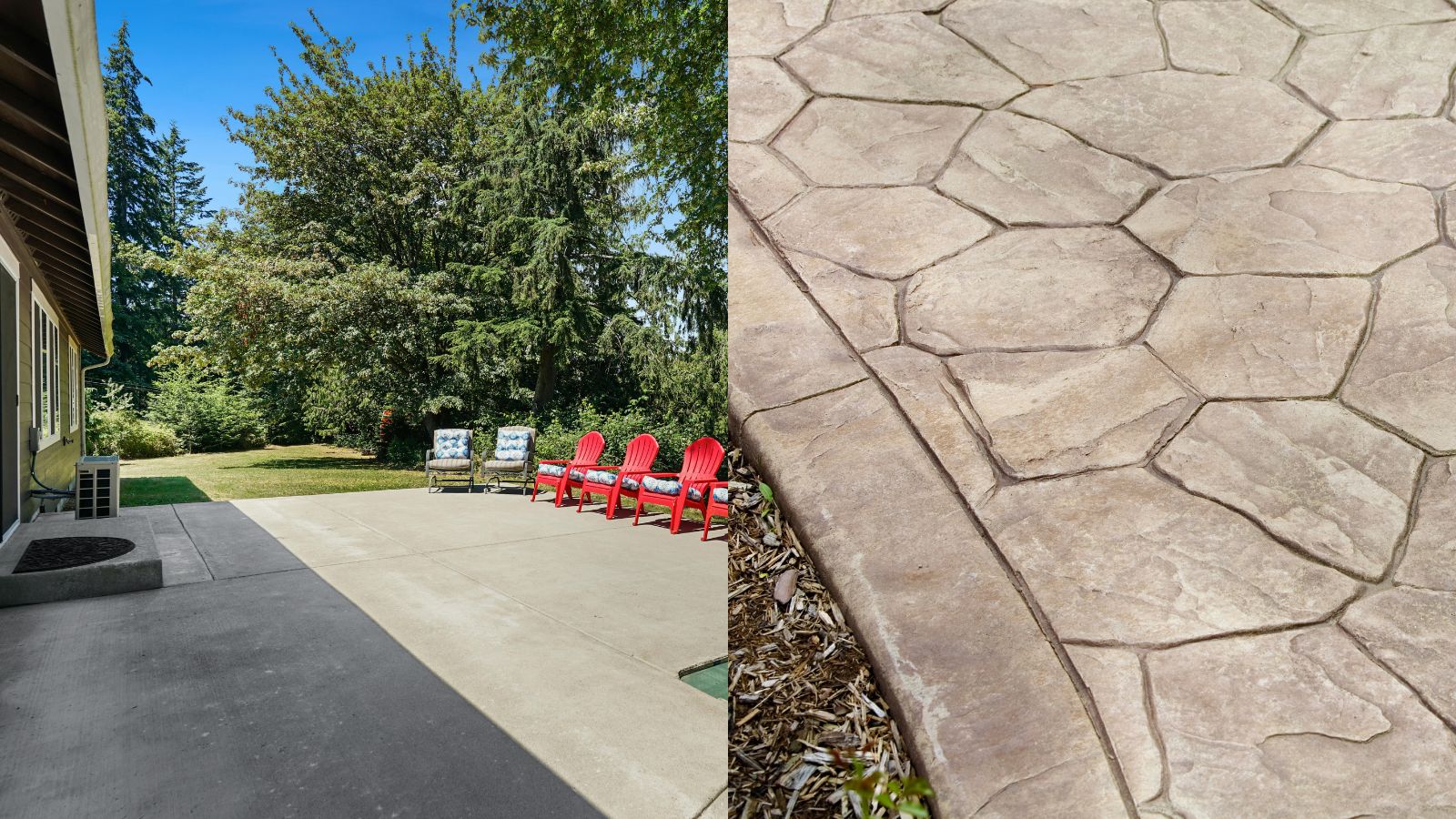
That said, decorative concrete has come a long way. Stamped concrete can credibly replicate flagstone, brick, or tile patterns at a fraction of the cost of the real thing. A well-executed stamped concrete patio or an exposed aggregate finish can look just as polished as pavers, especially from a distance.
If aesthetics are your top priority and budget is less of a concern, pavers give you more options. If you want a good-looking patio at a reasonable price, decorative concrete delivers excellent results.
Resale Value
Both concrete patios and paver installations add value to a home, but the return on investment differs. High-quality paver patios — especially with natural stone — are often viewed more favorably in appraisals and buyer perception in the higher price points of the Hill Country and San Antonio luxury market. For most mid-range homes, a well-done concrete patio adds comparable functional value at a lower investment.
Neither material is a poor choice from a resale standpoint — a clean, well-maintained outdoor space sells homes. The question is whether the premium for pavers makes sense for your price point and neighborhood.
Which Should You Choose?
Here’s a simple framework:
- Choose concrete if you want a durable, low-maintenance patio at the best possible price. A broom finish is practical and clean; decorative finishes give you elevated aesthetics without the cost of pavers.
- Choose pavers if aesthetics are a top priority, budget is flexible, and you’re prepared for more ongoing maintenance. Pavers are also a strong choice for areas where you want repair flexibility — driveways, for example, where utility cuts or root movement might affect individual sections over time.
For most San Antonio homeowners building a standard backyard or front patio, concrete is the smarter choice. It’s what most professional concrete contractors in this area recommend — not because it’s easier to install, but because it performs well here and gives homeowners a strong result for a reasonable investment.
Frequently Asked Questions
Is concrete or pavers better for a patio in San Antonio?
For most homeowners in San Antonio, concrete is the better value. It costs significantly less than pavers, requires less maintenance, and holds up well in the Texas heat when properly installed. Pavers offer more flexibility in aesthetics and repair, but they come at a higher upfront cost and require more ongoing upkeep. The best choice depends on your budget, priorities, and how you plan to use the space.
How much more do pavers cost than concrete?
Pavers typically cost two to three times more than poured concrete for the same square footage. A standard concrete patio runs roughly $6–$10 per square foot in San Antonio; pavers generally run $15–$30 per square foot installed, and natural stone pavers can cost even more. On a 300 square foot patio, that difference can range from $2,700 to $6,000 or more.
Do pavers crack less than concrete?
Pavers handle ground movement more flexibly than poured concrete because the joints between units allow for minor shifting. Concrete slabs can develop surface cracks over time, especially on San Antonio’s expansive clay soils. However, a properly prepared concrete slab with control joints performs well in most residential applications. The cracking risk for concrete is manageable with correct installation — it’s not a reason to automatically choose pavers.
How hot do concrete patios get in the San Antonio summer?
Concrete absorbs and retains heat, and in San Antonio summers it can get uncomfortably hot underfoot in direct afternoon sun. Light-colored concrete reflects more solar heat than darker finishes or dark pavers. For patios with significant sun exposure, a lighter finish — standard gray concrete or a light aggregate — is preferable to darker decorative options. Adding shade structures is the most effective solution regardless of which surface material you choose.
Can I stamp concrete to look like pavers?
Yes. Stamped concrete can replicate the look of brick, flagstone, slate, and other paver patterns at a cost significantly lower than installing real pavers. The texture and color are applied during the pour, and when done well, the results are convincing. Stamped concrete is a popular middle ground for homeowners who want the look of pavers without the price.
Which is easier to repair — concrete or pavers?
Pavers are easier to repair because individual units can be pulled and replaced without affecting the rest of the surface. Repairing a cracked concrete slab is more involved — patches are visible and rarely disappear completely. For applications where you anticipate future repairs (driveways near trees, utility corridors), pavers may be worth the premium for that reason alone.
How long do pavers last compared to concrete?
Both materials have similar lifespans when properly installed — 25 to 40 years or more is realistic for either in a residential application. The difference is in how aging looks and what maintenance is involved. Concrete may develop surface cracks and staining over time. Pavers tend to settle and shift, requiring periodic releveling and re-sanding. Neither material degrades dramatically under normal use.
Do I need a permit to install a patio in San Antonio?
In most cases, adding a patio to a residential property in San Antonio does not require a standalone permit. However, if the patio is attached to the home, if it involves drainage modifications, or if your property is in an HOA community, additional approvals may be required. Check with the City of San Antonio or your local authority to confirm what applies to your project before work begins.
Can concrete be installed on a slope?
Yes. Concrete can be poured on sloped terrain and graded to direct water away from the structure. In San Antonio and the Hill Country, sloped lots are common, and concrete is a reliable choice for patios and flatwork on properties with grade changes. Retaining walls are sometimes needed alongside the patio to manage the slope — our retaining walls and flatwork page covers that scope in more detail.
What is the best patio material for the Texas Hill Country?
Concrete performs well across most Hill Country applications — it handles rocky terrain and sloped lots effectively and holds up in the heat. For properties where aesthetics are the priority — high-end Hill Country homes, outdoor entertaining spaces with premium finishes — natural stone pavers or travertine are popular choices that complement the landscape. Both materials work here; the decision comes down to budget, maintenance preferences, and the overall design of the property.
Get a Quote on Your San Antonio Patio Project
Forge Concrete & Demolition installs concrete patios, flatwork, and retaining walls for homeowners and builders across San Antonio, Boerne, Fair Oaks Ranch, Helotes, and the Texas Hill Country. If you’re ready to add outdoor living space to your property, we’ll give you a straight quote and honest guidance on what makes sense for your project.
Contact us today to request a quote or learn more about our retaining walls and flatwork services.